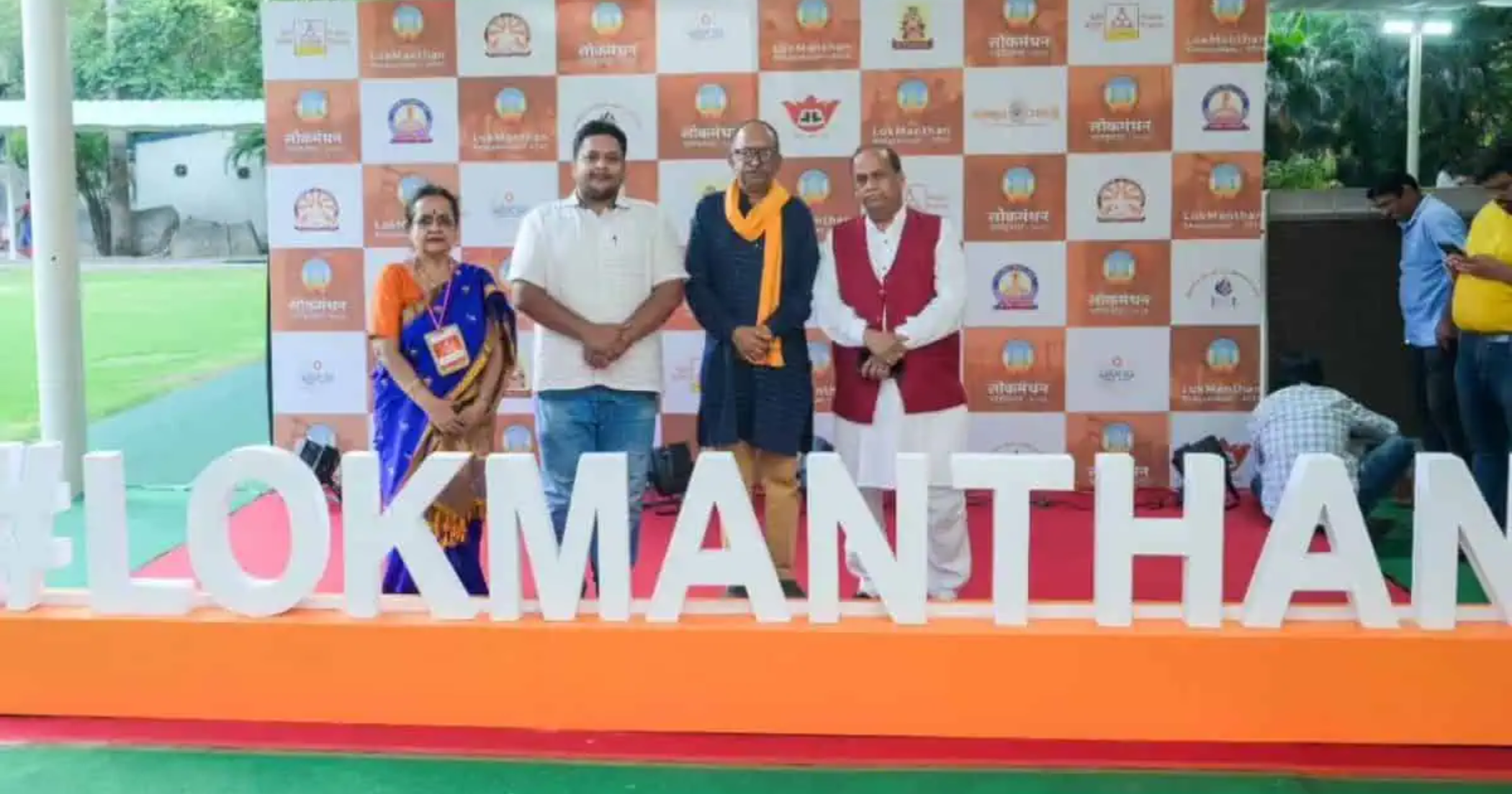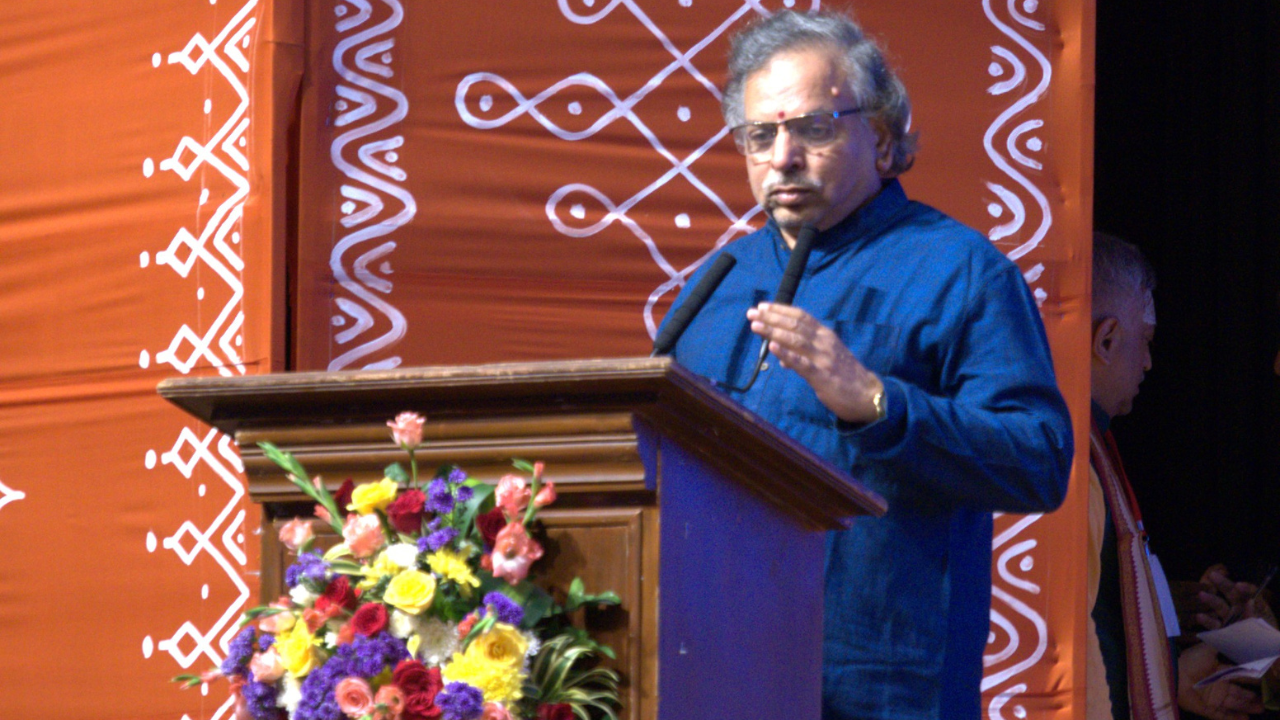


Lokmanthan Bhagyanagar 2024: Shankhnaad for a Cultural Reawakening
Founder, AV Foundation
The essence of Bharat lies in its Sanskriti, in its deeply rooted values and in its unparalleled diversity. However, in the post-colonial era, diversity is often narrowly interpreted through the lens of religious plurality. In reality, Bharat has always been a civilisation that has embraced a multitude of belief systems, languages and ways of life—an inclusivity that predates the emergence of Christianity and Islam by thousands of years. For decades, distortions and selective narratives have sought to distance future generations from Bharat’s rich cultural heritage. A deliberate attempt was made to promote colonial and Mughal histories while marginalising the countless stories of valour and resilience that defined the land. Influenced by external forces, even academic discourse in the country prioritised the narratives of foreign rulers over indigenous achievements. Yet, despite the long-standing adage that “history is written by the victors,” the truth has an undeniable way of resurfacing.
Today, Bharat’s youth are rediscovering their civilisational roots. They find deeper connections in the wisdom of the Vedas and Upanishads and they stand in awe of the architectural marvels of ancient temples—expressions of artistic and spiritual grandeur that often surpass the colonial and Islamic influences once glorified in textbooks. This resurgence of cultural consciousness has been significantly bolstered by initiatives such as Lokmanthan, which serve as a platform for reclaiming and celebrating Bharat’s authentic heritage. Lokmanthan has played a pivotal role in dismantling entrenched misconceptions and countering narratives that have long sought to undermine Bharat’s cultural integrity. Many of the institutions that propagated these distortions are now losing relevance, as a renewed appreciation for Bharat’s indigenous traditions takes hold.
More than a mere event, Lokmanthan represents a movement—one that underscores the importance of cultural resilience and the strength of diversity. The 2024 edition in Hyderabad reinforced the idea that Bharat’s plurality is not just a historical reality, but a contemporary asset. True unity does not stem from uniformity, but from the ability to coexist while preserving one’s unique identity. At its core, Lokmanthan is a blueprint for an inclusive and harmonious future; not just for Bharat, but for the world. It offers a compelling vision where cultures flourish without the fear of erasure, where indigenous wisdom is valued and where history is acknowledged in its entirety—unfiltered and undistorted. As Bharat takes its rightful place in global cultural discourses, Lokmanthan stands as a beacon of this reawakening, ensuring that the legacy of this ancient civilisation continues to inspire and show the path of righteousness to many future generations.