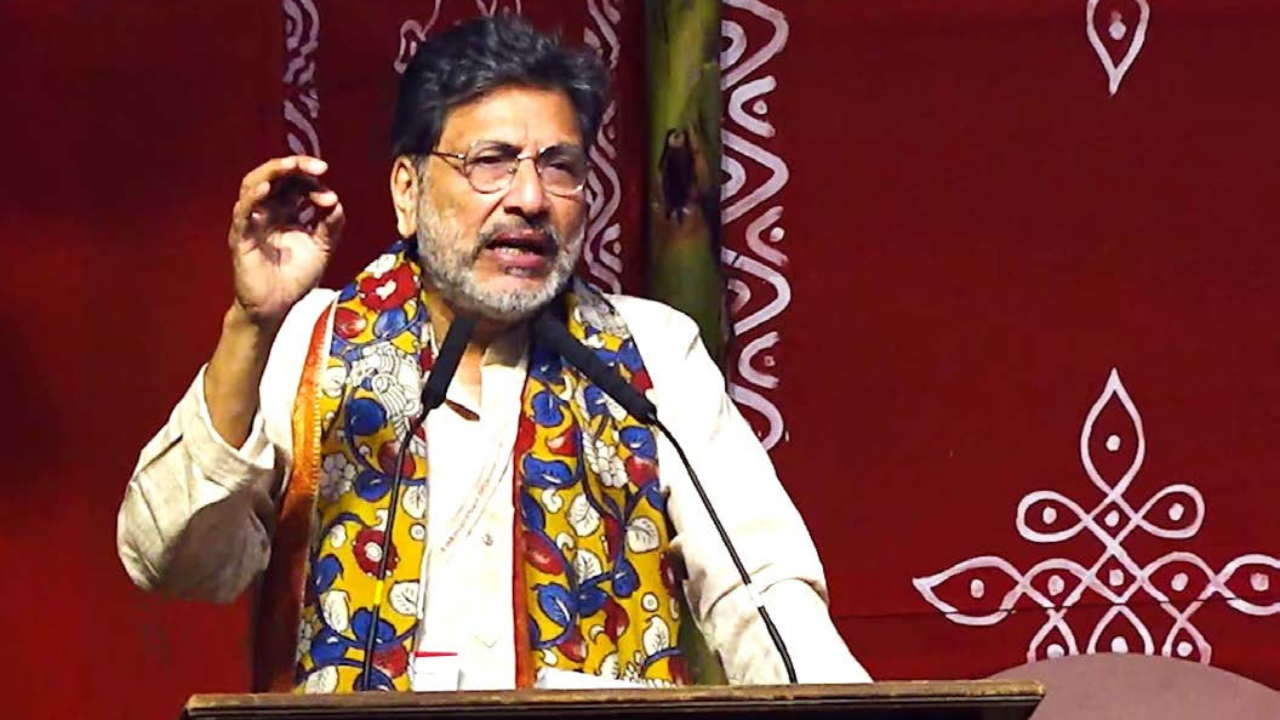

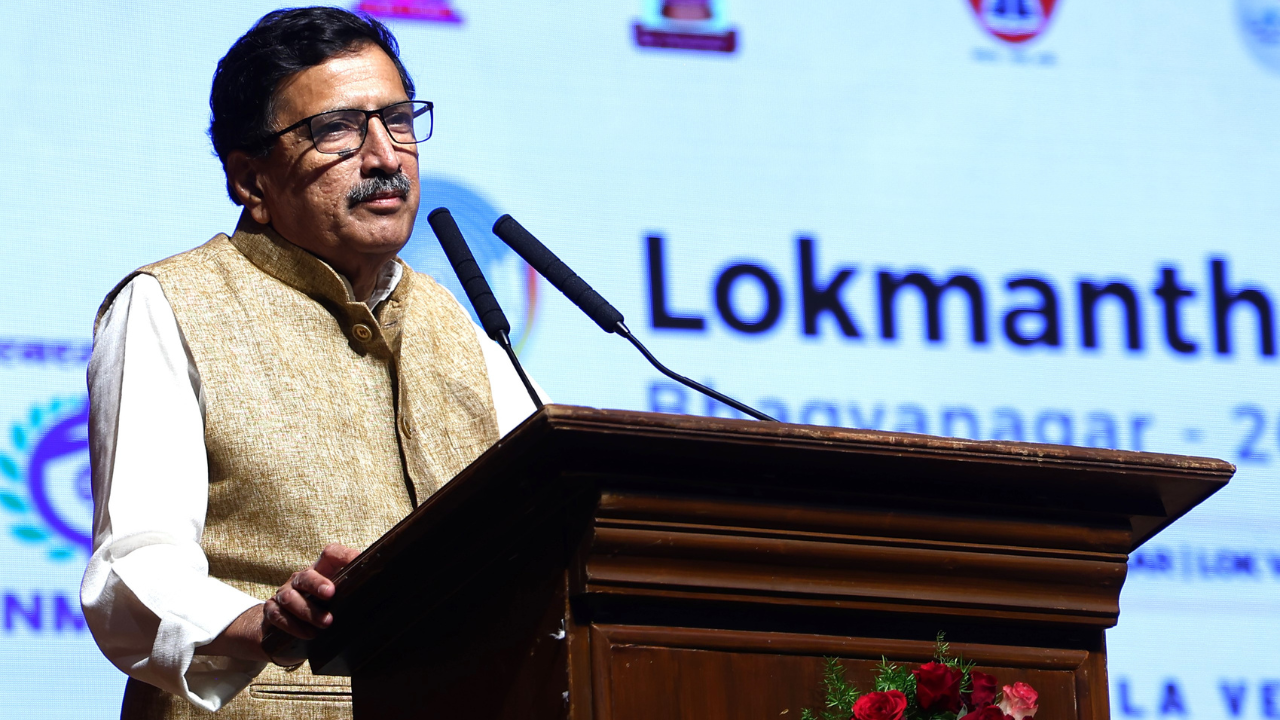
Dr. Harsh Chouhan Former Chairman, NCST Respected Vishnu ji, Prafulla ji and esteemed members of Lokmanthan
A Challenging but Crucial Topic
While I have been introduced as the main speaker, I am actually part of a panel. The topic given to me, “Inclusive Development” (Sarva Samaveshi Vikas), initially seemed quite challenging. However, knowing that Prafulla ji would be moderating and that Milind Thatte ji, who has worked extensively on this issue, would be present, I felt reassured. Unfortunately, due to an emergency, he couldn’t join, making the topic even more daunting. As Prafulla ji mentioned, “Inclusive Growth” is often perceived as an issue of activism, emerging due to societal injustice. Activism, driven by justice and compassion, arises when a response is required. My perspective is shaped by my experiences in the field. Rather than making definitive statements, I wish to share my observations, questions and some possible solutions.
Understanding ‘Sarva’ (All) in Development
Each term in “Sarva Samaveshi Vikas”-Sarva (All), Samaveshi (Inclusive) and Vikas (Development)- presents unique challenges. As Prafulla ji pointed out, these terms have external origins. For example, in Jhabua, where we work, youth driven by a higher purpose began building water structures, not just for human benefit but out of reverence for Mother Earth. A Mumbai-based organisation, Young Volunteers Organisation, ran a campaign called “Donate a Pizza Month.” They contributed funds for a pond project but asked about the number of beneficiaries. This raised an important question: Who are the real beneficiaries? Do we count only farmers, or also animals, birds and the environment? If we count everyone, then all of us are beneficiaries. This example illustrates how a limited understanding of “Sarva” creates complexities. In tribal societies, “Sarva” naturally includes all living beings, reflecting the essence of Sanatan traditions.
Inclusion: A Response to Social Fragmentation
The term “Samaveshi” (Inclusive) suggests an existing division that needs bridging. Historically, classifications like Scheduled Castes and Scheduled Tribes created separations, necessitating inclusion efforts. Two significant terms that have influenced India are “Asprishya” (untouchable) and “Asabhya” (uncivilised). While the origins of untouchability require deeper research, the notion of being “uncivilised” was imposed during British rule. The Anglo-Saxon worldview perceived indigenous tribes as primitive and dangerous, leading to their exploitation.
This colonial mindset influenced our own perception of tribal communities. Growing up in the city, I noticed how urban narratives depicted tribal people as uncivilised and fearful-an image shaped by textbooks and films modelled on Hollywood’s portrayal of indigenous people. This misconception persists, framing development as an effort to “civilise” these communities, often leading to misguided policies.
Rethinking Development: From ‘Vikas’ to ‘Samriddhi’
If we truly consider “Sarva” (All), we need to shift our focus from “Vikas” (Development) to “Samriddhi” (Prosperity). Development, as understood today, is often rigid and individual- centric. A student from IIT who visited Jhabua once shared his evolving understanding of development. Initially, he believed it meant securing good marks. Later, he thought it was about acquiring skills. Eventually, he saw development as collective progress. However, after staying in the village, he realised that true development is not about individual success, but about uplifting others. When he asked a villager whether a newly built pond would lead to their development, the villager replied, “No, our development will happen when we go to another village and build a pond there.” This aligns with a historical perspective on civilisation. When an international philosopher was asked about the first evidence of civilisation, he pointed to a healed animal bone, indicating “civilisation begins when we help each other”. Development, then, should focus on mutual prosperity rather than mere individual advancement.
Tribal Wisdom and the Need for a New Perspective
Our villages still embody Sanatan traditions that emphasise collective well-being. However, policy making often ignores this perspective. For instance, in tribal communities, ownership is communal, not individual. Yet, many development models impose an individualistic approach, leading to failure. A more effective approach is to work with communities rather than impose external solutions. In Jhabua, we started by discussing village concerns collectively. This led to a successful water conservation movement, eventually evolving into a holistic development initiative. In this process: When one village built a pond, people from 16 villages came to help. When they saw the need for afforestation, they began planting trees. When asked about their personal benefit, they struggled to answer— because their motivation was communal well-being. Similarly, when they embraced organic farming, they saw it as a duty to protect Mother Earth rather than a mere economic choice. Even when crops were at risk, they refused to use pesticides, relying instead on traditional methods and hard work.
The Pitfalls of Imposed Development Models
A key issue with modern development programmes is the top-down approach that disregards local realities. For example, in 1992-93, the Sarva Shiksha Abhiyan was launched to improve literacy. India faced global criticism for low literacy rates, prompting a massive government campaign. Professor Yashpal suggested suspending higher education for a year to focus on literacy. However, despite heavy funding, results
were dismal. In Jhabua, the government spent ₹8,000 per person on literacy efforts. When officials were asked why the programme failed, the response was, “We provided resources, but they don’t want to learn.” This assumption was flawed. We, as young volunteers, felt the issue was not the willingness to learn but the method of teaching. To address this, we initiated Ekal Vidyalayas (One-Teacher Schools) with community involvement. Out of 157 schools, 60 became successful within three years. The key difference was a participatory approach, rather than an imposed structure.
Conclusion: Towards a More Holistic Approach Development should not be reduced to numerical targets or imposed solutions. Instead, it should emerge from community-driven initiatives rooted in their values and traditions.
Reconsider Terminology: Shift from “Vikas” (Development) to “Samriddhi” (Prosperity) to emphasise holistic well-being.
Redefine Inclusion: Inclusion should be about shared activities and decisions, not just policies and rhetorid
Learn from Traditional Wisdom: Rural and tribal communities already practice sustainable, inclusive prosperity. Policy-makers should recognise and support these models.
Encourage Community-Led Initiatives: True progress happens when communities take ownership of their development, rather than being passive recipients of external aid. By embracing this approach, development becomes simple and natural, rather than a complex and fragmented process. Let us strive towards prosperity that includes all humans, nature, and future generations.
Thank you!
“If we truly consider ‘Sarva’ (All), we need to shift our focus from ‘Vikas’ (Development) to ‘Samriddhi’ (Prosperity).
– Dr. Harsh Chouhan
Former Chairman, NCST
While I have been introduced as the main speaker, I am actually part of a panel. The topic given to me, “Inclusive Development” (Sarva Samaveshi Vikas), initially seemed quite challenging. However, knowing that Prafulla ji would be moderating and that Milind Thatte ji, who has worked extensively on this issue, would be present, I felt reassured. Unfortunately, due to an emergency, he couldn’t join, making the topic even more daunting. As Prafulla ji mentioned, “Inclusive Growth” is often perceived as an issue of activism, emerging due to societal injustice. Activism, driven by justice and compassion, arises when a response is required. My perspective is shaped by my experiences in the field. Rather than making definitive statements, I wish to share my observations, questions and some possible solutions.
Understanding ‘Sarva’ (All) in Development
Each term in “Sarva Samaveshi Vikas”-Sarva (All), Samaveshi (Inclusive) and Vikas (Development)- presents unique challenges. As Prafulla ji pointed out, these terms have external origins. For example, in Jhabua, where we work, youth driven by a higher purpose began building water structures, not just for human benefit but out of reverence for Mother Earth. A Mumbai-based organisation, Young Volunteers Organisation, ran a campaign called “Donate a Pizza Month.” They contributed funds for a pond project but asked about the number of beneficiaries. This raised an important question: Who are the real beneficiaries? Do we count only farmers, or also animals, birds and the environment? If we count everyone, then all of us are beneficiaries. This example illustrates how a limited understanding of “Sarva” creates complexities. In tribal societies, “Sarva” naturally includes all living beings, reflecting the essence of Sanatan traditions.
Inclusion: A Response to Social Fragmentation
The term “Samaveshi” (Inclusive) suggests an existing division that needs bridging. Historically, classifications like Scheduled Castes and Scheduled Tribes created separations, necessitating inclusion efforts. Two significant terms that have influenced India are “Asprishya” (untouchable) and “Asabhya” (uncivilised). While the origins of untouchability require deeper research, the notion of being “uncivilised” was imposed during British rule. The Anglo-Saxon worldview perceived indigenous tribes as primitive and dangerous, leading to their exploitation.
This colonial mindset influenced our own perception of tribal communities. Growing up in the city, I noticed how urban narratives depicted tribal people as uncivilised and fearful-an image shaped by textbooks and films modelled on Hollywood’s portrayal of indigenous people. This misconception persists, framing development as an effort to “civilise” these communities, often leading to misguided policies.
Rethinking Development: From ‘Vikas’ to ‘Samriddhi’
If we truly consider “Sarva” (All), we need to shift our focus from “Vikas” (Development) to “Samriddhi” (Prosperity). Development, as understood today, is often rigid and individual- centric. A student from IIT who visited Jhabua once shared his evolving understanding of development. Initially, he believed it meant securing good marks. Later, he thought it was about acquiring skills. Eventually, he saw development as collective progress. However, after staying in the village, he realised that true development is not about individual success, but about uplifting others. When he asked a villager whether a newly built pond would lead to their development, the villager replied, “No, our development will happen when we go to another village and build a pond there.” This aligns with a historical perspective on civilisation. When an international philosopher was asked about the first evidence of civilisation, he pointed to a healed animal bone, indicating “civilisation begins when we help each other”. Development, then, should focus on mutual prosperity rather than mere individual advancement.
Tribal Wisdom and the Need for a New Perspective
Our villages still embody Sanatan traditions that emphasise collective well-being. However, policy making often ignores this perspective. For instance, in tribal communities, ownership is communal, not individual. Yet, many development models impose an individualistic approach, leading to failure. A more effective approach is to work with communities rather than impose external solutions. In Jhabua, we started by discussing village concerns collectively. This led to a successful water conservation movement, eventually evolving into a holistic development initiative. In this process: When one village built a pond, people from 16 villages came to help. When they saw the need for afforestation, they began planting trees. When asked about their personal benefit, they struggled to answer— because their motivation was communal well-being. Similarly, when they embraced organic farming, they saw it as a duty to protect Mother Earth rather than a mere economic choice. Even when crops were at risk, they refused to use pesticides, relying instead on traditional methods and hard work.
The Pitfalls of Imposed Development Models
A key issue with modern development programmes is the top-down approach that disregards local realities. For example, in 1992-93, the Sarva Shiksha Abhiyan was launched to improve literacy. India faced global criticism for low literacy rates, prompting a massive government campaign. Professor Yashpal suggested suspending higher education for a year to focus on literacy. However, despite heavy funding, results
were dismal. In Jhabua, the government spent ₹8,000 per person on literacy efforts. When officials were asked why the programme failed, the response was, “We provided resources, but they don’t want to learn.” This assumption was flawed. We, as young volunteers, felt the issue was not the willingness to learn but the method of teaching. To address this, we initiated Ekal Vidyalayas (One-Teacher Schools) with community involvement. Out of 157 schools, 60 became successful within three years. The key difference was a participatory approach, rather than an imposed structure.
Conclusion: Towards a More Holistic Approach Development should not be reduced to numerical targets or imposed solutions. Instead, it should emerge from community-driven initiatives rooted in their values and traditions.
Reconsider Terminology: Shift from “Vikas” (Development) to “Samriddhi” (Prosperity) to emphasise holistic well-being.
Redefine Inclusion: Inclusion should be about shared activities and decisions, not just policies and rhetorid
Learn from Traditional Wisdom: Rural and tribal communities already practice sustainable, inclusive prosperity. Policy-makers should recognise and support these models.
Encourage Community-Led Initiatives: True progress happens when communities take ownership of their development, rather than being passive recipients of external aid. By embracing this approach, development becomes simple and natural, rather than a complex and fragmented process. Let us strive towards prosperity that includes all humans, nature, and future generations.
Thank you!
“If we truly consider ‘Sarva’ (All), we need to shift our focus from ‘Vikas’ (Development) to ‘Samriddhi’ (Prosperity).
– Dr. Harsh Chouhan
Former Chairman, NCST