
A Movement for the Restoration of Lok-Sabhyata
Prajna Pravah, Kendra Toli Member
Bharat’s civilisation spread across the length and breadth of Akhand Bharat, with many commonalities and linkages, while having its own local flavours that uniquely enriched the nation’s unity in diversity. It was the first civilisation to develop as an urban civilisation, with megacities such as Mohenjodaro, Harappa, Dholavira and Kalibangan and it later evolved into a dominant rural based civilisation. Technology, ideas, philosophies and societal structures were common or shared between urban, rural and forest areas. The elite of the elites too had to attend Gurukulas in villages or forest areas for their higher education. Cutting across their Varna or Jaati, kings and commoners studied together under the same teacher in these Gurukulas. Great scientific discoveries such as the concept of Zero, Infinity, Algebra, Alloys, Alchemy, Economics, Political Science, Diplomacy, Warfare and many philosophies were discovered or invented in these forest/village Gurukulas.
After the foreign invasions of Bharat—first by barbaric Islamic plunderers, then by Christian colonialists—this unique balance and connectivity were severely impacted. While many in urban areas adapted to the invaders’ religion and lifestyles, either by coercion or choice, the vast stretch of Bharat, in its villages and forest dwellings, retained the wisdom, knowledge and societal experiences passed down from their ancestors and largely avoided the invaders’ impositions. The West considered city dwellers as civilised and the village and forest dwellers as barbarians. Whatever the city dwellers did was considered classic and whatever the rural and forest dwellers did was considered ‘folk’, in other words, ‘uncivilised’.
Even the term ‘citizen’ was derived from the word ‘city’, thus disenfranchising non-city dwellers. The colonialists imposed these concepts in Bharat as well, bringing in this artificial division in society. Severe restrictions were imposed on the non-city dwellers to discourage and wean them away from their traditional beliefs and lifestyles. While the concept of indigenous people is applicable in territories conquered by the West, such as the USA, Canada, Australia and New Zealand, such a concept is not applicable to Bharat. People who live either in cities, villages or forests are all indigenous people, native to this land. They were termed nagaravasi, gramavasi or vanavasi, based on their place of dwelling. However, calling the forest dwellers as Vanvasi or indigenous people was a carefully constructed conspiracy to call the city dwellers as foreign/alien invaders or occupiers. The narrative set by the colonialists devastated Bharat’s social fabric, pitting one group against another and dealt a debilitating blow to the ancient art forms, scientific knowledge and wisdom of its people.
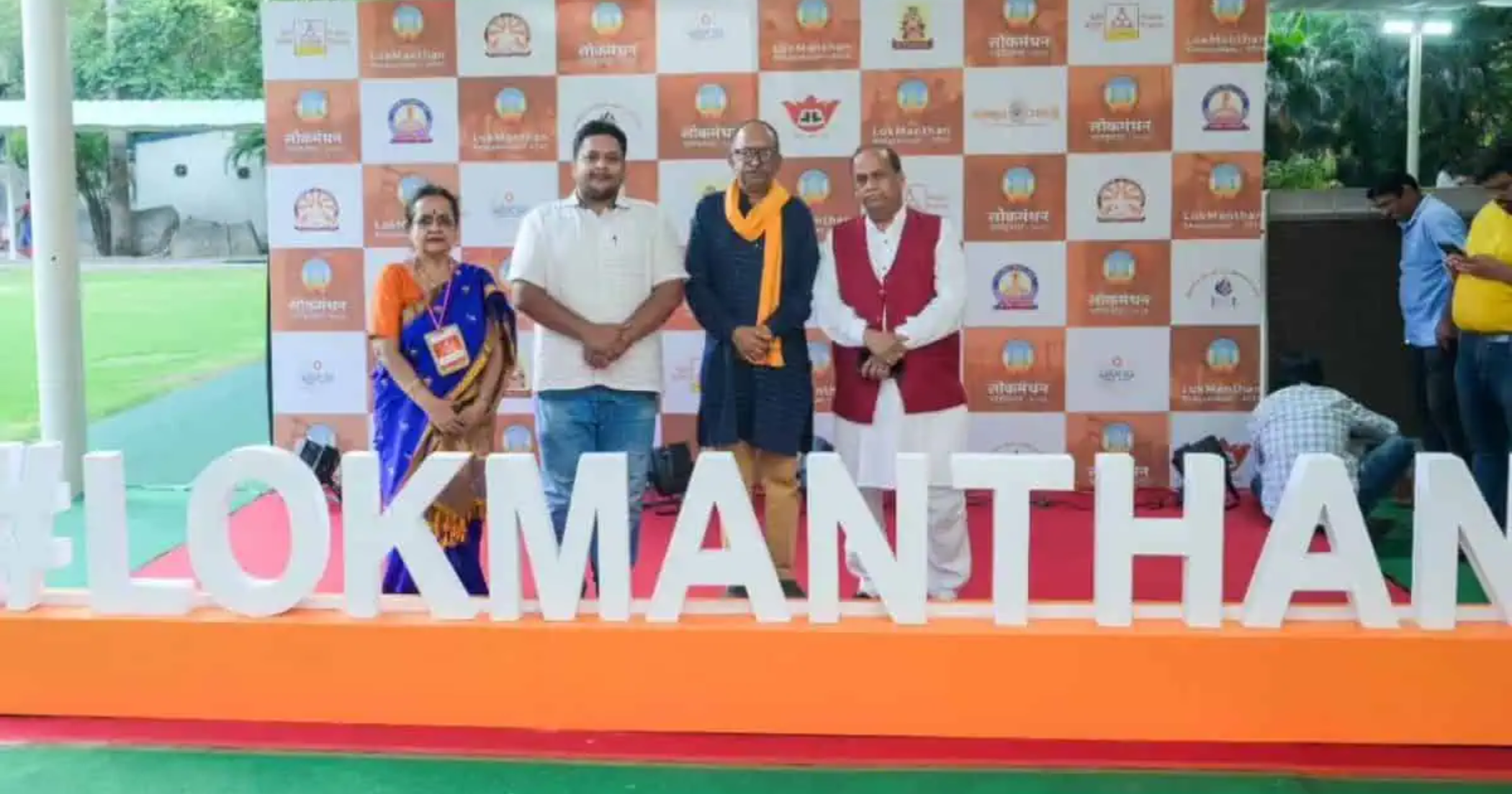
Lokmanthan is an effort to correct these atrocious blows to Bharat’s civilisational injustices. It is a colloquium of Bharat-first thinkers and practitioners. It is a unique effort to bring intellectuals, artists, practitioners and activists together to present solutions and understandings to these challenges. This is a biennial programme that started in 2016 at Bhopal. The Bhopal edition focused on Decolonising the Indian Mind. This was an attempt to expose the sinister and diabolical programmes of the colonisers.
The 2018 edition of Lokmanthan in Ranchi, Jharkhand, focused on the theme Bharat Bodh: Jana Gana Mana. This edition focused on the wisdom of Bharat that has been largely forgotten, ignored or discredited. The year 2020 saw major shutdowns due to the Wuhan Coronavirus and hence, this event could not be held. The 2022 edition in Guwahati, Assam, focused on Lok Parampara—traditions, practices and legacies of the rural and forest dwellers.
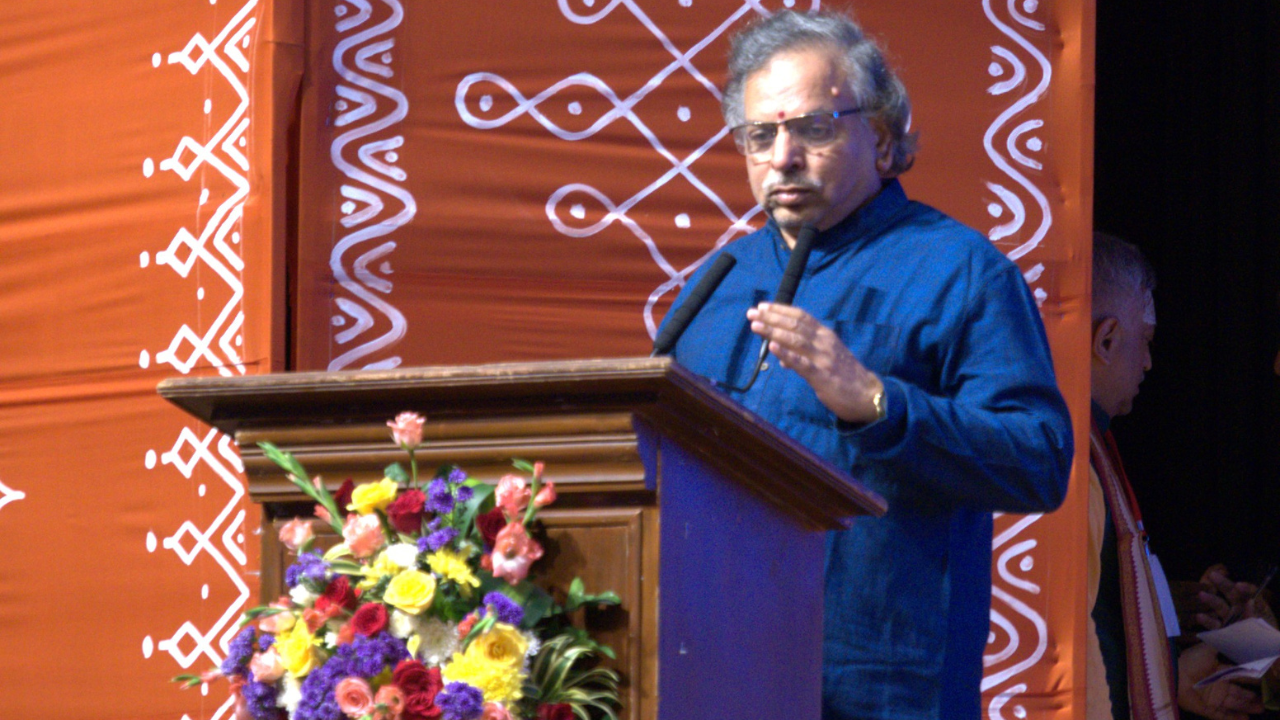
Lokmanthan 2024 was held in Bhagyanagar from the 21st of November to the 24th of November at Shilpakala Vedika. The theme of this edition was Lok Avalokan, meaning ‘the thought processes of Lok’. This had three sub-themes: Lok Vichaar, Lok Vyavhaar, Lok Vyavasta. Lok Vichaar focussed on the thought processes that shaped the lives and
culture of Bharat, in harmony with nature. Lok Vyavhaar focussed on practices and traditions that evolved over time in sync with prevailing thoughts, circumstances and regions. Lok Vyavastha focussed on the established systems and institutions that catalysed holistic growth, progress and security for diverse communities.
Every Bharatiya interested to see the renaissance of Bharat’s traditions, culture, practices and legacies— especially from the rural and forest areas—attended this wonderful celebration. Artists, artisans, musicians and performers of dance and drama who respected and valued Bharat’s culture and traditions were present for this programme to carry forward the baton of Bharat’s civilisation to the present and future generations.
Om Dyauh Shaantir-Antarikssam Shaantih Prthivii
Shaantir-Aapah Shaantir-Ossadhayah Shaantih |
Vanaspatayah Shaantir-Vishvedevaah Shaantir Brahma Shaantih
Sarvam Shaantih Shaantir-Eva Shaantih Saa Maa Shaantir-Edhi |
Om Shaantih, Shaantih, Shaantih ||
Om, Shanti is in Sky; Shanti is in Space (between Earth and Sky); Shanti is in Earth; Shanti is in Water; Shanti is in Plants;
Shanti is in Trees; Shanti is in Gods (presiding over the various elements of Nature); Shanti is in Brahman (Absolute Consciousness); Shanti is pervading everywhere; Shanti alone (which is outside) is in Shanti (which is inside); May you be (established in) that Shanti (and make your life fulfilled);
Om, Shanti, Shanti, Shanti!
This is the noble wisdom of Bharat that Lokmanthan aims to share with the world.